


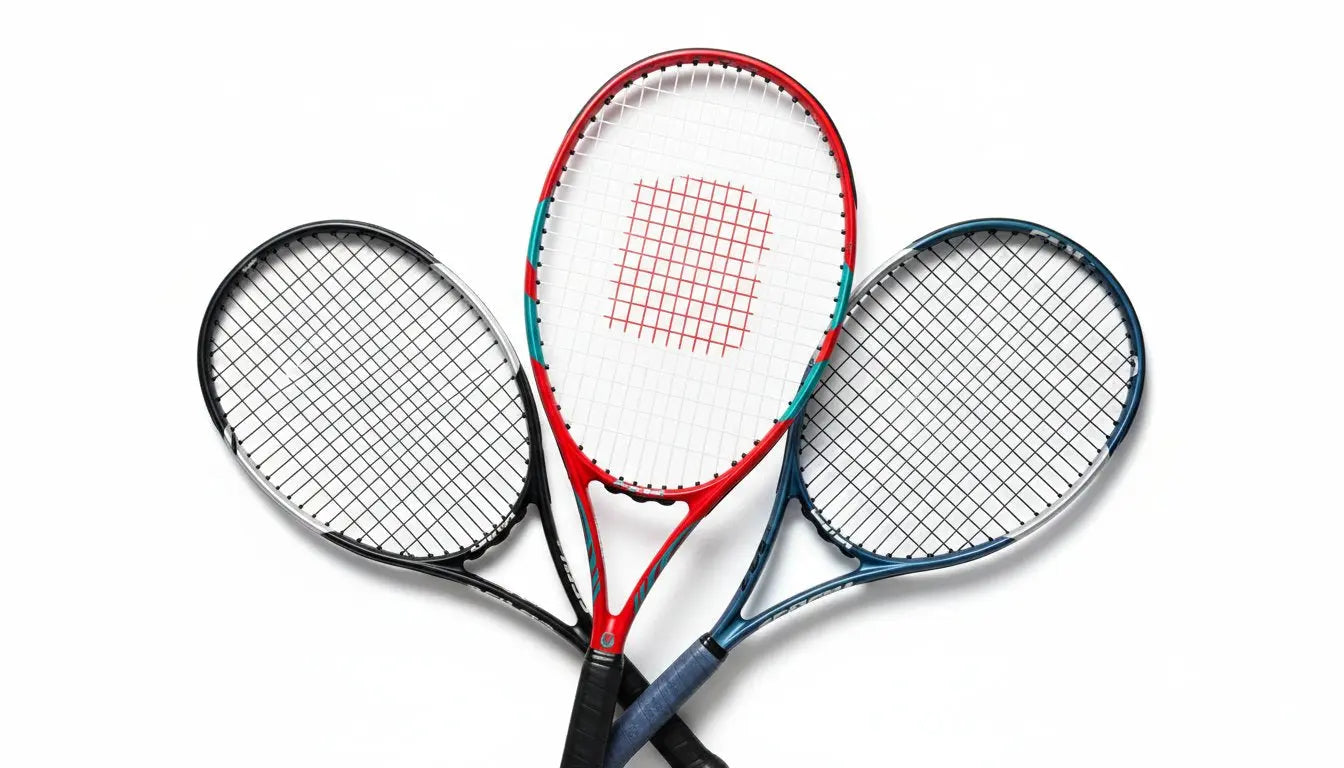
Walking into a tennis shop or browsing online can feel overwhelming. With so many options, technical specs, and conflicting advice, how do you avoid spending hundreds of dollars on a racquet that ends up hurting your arm or holding back your game? It?s a frustrating scenario we see all too often, where a passionate player makes one of the classic common mistakes when buying a tennis racquet and ends up with a piece of gear that just doesn't feel right. We believe choosing a new racquet should be an exciting step forward, not a stressful gamble.
That?s why we?re here to help! As your local tennis experts, we want you to feel totally confident in your purchase. In this guide, we?ll break down the seven crucial pitfalls to sidestep-from picking the wrong weight and balance to completely ignoring the vital role of strings. You?ll learn exactly what to look for, so you can make a smarter buying decision and find a racquet that perfectly matches your playing style. Let's get you ready to walk onto the court with a fantastic new racquet that feels like a true extension of your arm.
Key Takeaways
- Choosing a racquet that truly matches your skill level and playing style is the first step to playing your best tennis.
- Learn why copying your favourite pro is one of the most common mistakes when buying a tennis racquet and what specs to focus on instead.
- Don't overlook the "engine" of your racquet; discover why strings and grip size are just as crucial as the frame for power and control.
- Find exceptional value by looking beyond the price tag, ensuring you get the perfect racquet for your game without over- or under-spending.
Mistake #1: Ignoring Your True Skill Level and Playing Style
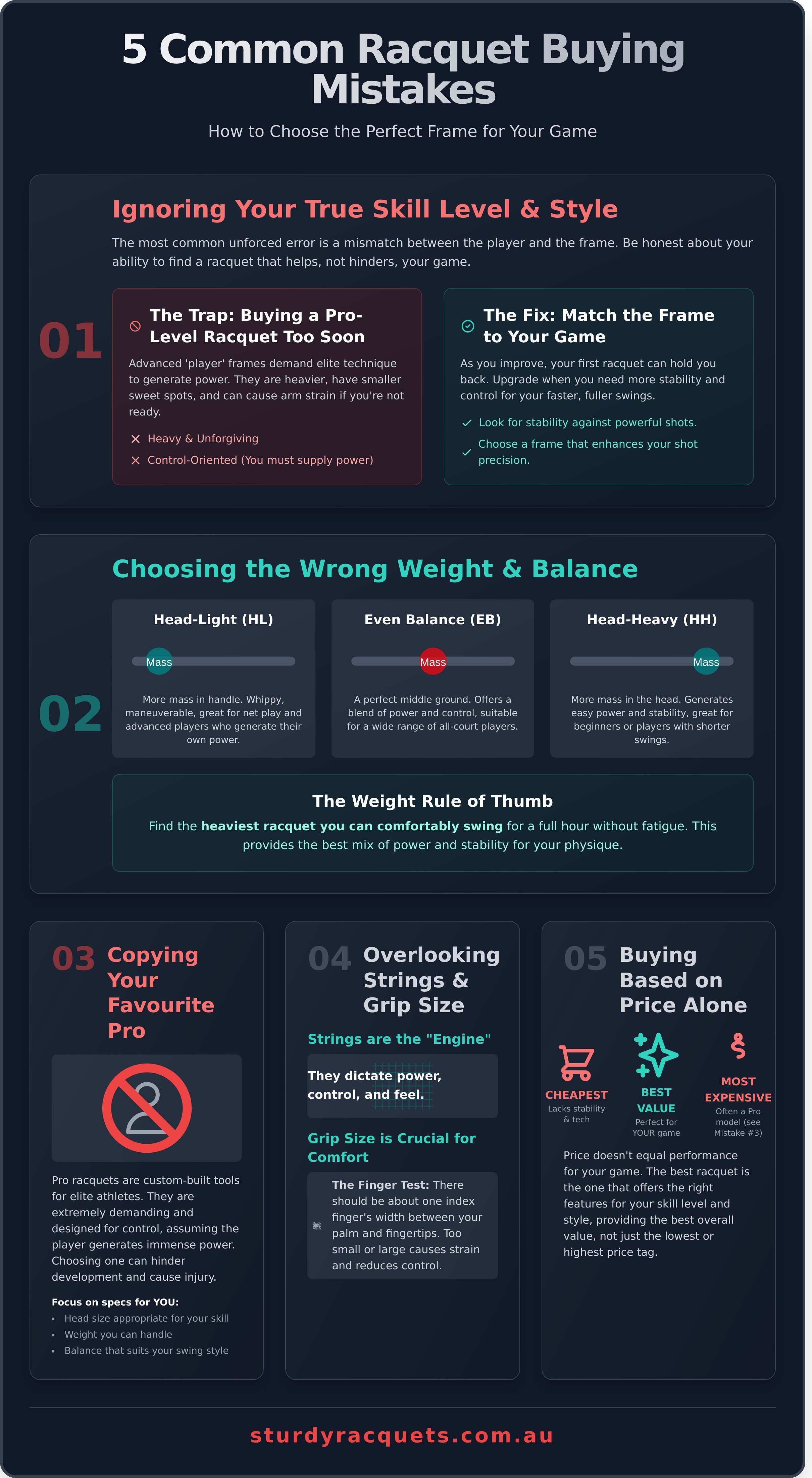
Let's kick things off with the biggest unforced error players make off the court. Of all the common mistakes when buying a tennis racquet, the most frequent is a mismatch between the player and the frame. Being honest about your current ability and playing style is the first, most important step. A great general Tennis equipment overview will tell you what racquets are, but only an honest self-assessment will tell you which one is right for you. The perfect racquet for one player could actively harm another's game.
The team at Tennisnerd explains this concept perfectly. Watch their helpful video for some top-notch advice:
Buying a Pro-Level Racquet Too Soon
We get it-it's exciting to use the same gear as the pros on TV. However, grabbing an advanced 'player's frame' too early is a classic trap. These racquets are typically heavier, with smaller head sizes and a less forgiving sweet spot. They demand exceptional technique to generate power and can lead to arm strain or tennis elbow. Remember, these frames are built to provide control to players who already create their own pace.
Sticking with a Beginner Racquet for Too Long
The opposite is also true! Outgrowing your first racquet is a great sign of progress, but not upgrading can stall your development. Those lightweight, oversized frames are brilliant for learning but can start to feel unstable and difficult to control as your swing gets faster. Signs you've outgrown your racquet include:
- Your shots consistently flying long, even with a full swing.
- The racquet feeling 'flimsy' or twisting in your hand against powerful opponents.
- Struggling to create precise angles and touch shots.
Recognizing these signs is key to knowing when it's time to find a racquet that offers the control and stability your improving game deserves.
Mistake #2: Choosing the Wrong Weight and Balance
If you've ever picked up two racquets of the same model and felt they were completely different, you've experienced the magic of weight and balance. These two specifications are the soul of a racquet, defining how it feels in your hand and how it moves through the air. They directly impact your swing speed, stability on impact, and overall comfort on the court. Ignoring them is one of the most common mistakes when buying a tennis racquet, and it's a fast track to frustration and even injury.
Let's quickly break down the key terms:
- Static Weight: This is simply how much the racquet weighs if you place it on a scale. It's usually measured in grams.
- Swingweight: This is a more dynamic measurement of how heavy the racquet feels when you swing it. A higher swingweight packs more punch but is harder to get moving.
- Balance Point: This tells you where the weight is concentrated-towards the head or the handle.
The Weight Fallacy: 'Lighter is Easier'
Many beginners assume a lighter racquet is always better, but that's a classic trap. While ultra-light racquets (under 280g) are very easy to manoeuvre, they often lack stability against heavy shots and can transmit more jarring vibrations to your arm. Heavier racquets provide a more solid, powerful feel but require good technique and strength to swing effectively. Our top advice? Find the heaviest racquet you can comfortably swing for a full hour without feeling fatigued. This is your ideal starting point for fantastic stability and power.
The Balance Point: Head-Heavy vs. Head-Light
The balance point dramatically changes a racquet?s feel, regardless of its static weight. Getting this right is crucial, and for players who love diving into the specs, resources like the official USTA gear recommendations offer fantastic technical insights. Here?s a simple guide:
- Head-Light (HL): With more mass in the handle, these racquets are whippy and easy to control at the net. They're favoured by advanced players who generate their own power and value precision.
- Head-Heavy (HH): More weight in the hoop helps the racquet plow through the ball, generating easy power. This makes them a popular choice for beginners and players with shorter swings.
- Even Balance (EB): As the name suggests, this is the perfect middle ground, offering a fantastic blend of power and control for the all-court player.
Ultimately, choosing the right weight and balance is about matching the racquet to your unique strength and style. Making an informed choice here is key to avoiding one of the most common mistakes when buying a tennis racquet and finding a frame that feels like a true extension of your arm.
Mistake #3: Copying Your Favourite Pro or Friend
We?ve all been there. You watch a Grand Slam final or see the top player at your club dominate a match, and you immediately think, "I need that racquet!" While it's a tempting shortcut, simply copying someone else's gear is one of the most common mistakes when buying a tennis racquet. Think of a racquet as an incredibly personal piece of equipment, much like a running shoe. What provides perfect support for one person?s stride could cause issues for another, and the same principle applies on the court.
What works for one player's unique body, technique, and swing style is rarely the perfect fit for another. This is a major pitfall for inexperienced buyers, leading to frustration and even potential injury down the track.
The 'Pro Stock' Myth: What They Use vs. What You Can Buy
Here?s a secret the pros don't often talk about: the racquet they play with is almost never the one you can buy in a store. Top professionals use heavily customised frames, known as 'pro stock' racquets, which are disguised with the 'paint job' of the latest retail model. These are often older frames, with lead tape and silicone added to weight and balance them to their exact, highly specific preferences. That racquet you see your hero swinging is a world away from the one on our shelf. The key takeaway? Focus on the specs that suit your game, not the player who endorses the frame.
Why Your Friend's 'Perfect' Racquet Might Be Wrong for You
This same logic applies to your hitting partner or club champion. Just because a racquet feels fantastic for them doesn't mean it will for you. Every player is unique, with crucial differences in:
- Swing Style: A long, flowing swing requires a different frame than a short, compact one.
- Strength Level: A heavier racquet might be perfect for your strong friend but could tire you out quickly and lead to poor form.
- Shot Preference: A frame that helps your mate hit blistering flat serves might feel terrible for your topspin-heavy groundstrokes.
The only way to know for sure is to try it yourself. We can't stress this enough: always demo a racquet before you buy. If you're feeling a bit lost in the sea of options, don't make an unforced error with your purchase. Chat with our racquet experts today! We're here to help you find your perfect match.
Mistake #4: Overlooking the Importance of Strings and Grip Size
You?ve found the perfect frame, but the job isn?t done yet. Focusing only on the racquet frame is one of the most common mistakes when buying a tennis racquet. The frame provides the potential, but the strings and grip are what deliver the performance and feel on every single shot. Think of the frame as the car, and the strings as the engine-you need a great engine to get the most out of your ride!
The Problem with 'Factory' Strings
Many racquets come pre-strung from the manufacturer, but these "factory" strings are rarely a good long-term solution. They are typically a low-quality, basic synthetic gut designed as a placeholder. The tension is generic and has likely dropped significantly while sitting in a warehouse or during shipping. For the best performance, always budget for an immediate restring (usually around A$40-A$60). Choosing a quality string at a tension that suits your game is the single best upgrade you can make to a new racquet, unlocking its true potential from day one.
Why Grip Size is Crucial for Performance and Health
Playing with the wrong grip size isn't just uncomfortable; it can hinder your game and even cause injury. It?s a critical detail that deserves your full attention.
- Too small: Forces you to squeeze the handle too tightly to prevent it from twisting. This leads to muscle fatigue and is a common cause of painful conditions like tennis elbow.
- Too large: Restricts your wrist's natural movement, making it harder to generate racquet head speed for spin and power. It also makes changing grips between shots feel slow and clumsy.
The Finger Test: To find your approximate size, hold the racquet in your normal forehand grip. You should be able to fit the index finger of your other hand snugly in the gap between your fingertips and the base of your palm. If you're between sizes, it's always better to choose the smaller one and build it up with an overgrip. Getting this right is essential for control, comfort, and staying injury-free on the court.
Mistake #5: Buying Based on Price Alone
It's tempting to let a price tag make the final decision, but this is one of the most common mistakes when buying a tennis racquet. While everyone has a budget, focusing only on the cost can lead you to a frame that hinders your game or, even worse, causes injury. The goal isn't to find the cheapest or most expensive racquet; it's to find the best value for your specific needs as a player.
Understanding what you get at different price points is key. A cheap racquet might save you money today, but it will cost you in performance and enjoyment on the court tomorrow.
The Dangers of the 'Department Store Special'
That A$70 racquet from a big-box store might seem like a bargain, but it's a classic trap for new players. These frames are typically made from basic aluminum, which creates harsh vibrations that are tough on your arm. They offer very little power or feel, and you'll outgrow its limited capabilities almost immediately. A far smarter investment is a quality entry-level graphite or graphite composite frame, which provides a much better foundation for learning the game.
Do You Really Need the Latest and Greatest Model?
On the other end of the spectrum, don't assume the most expensive A$350+ racquet is automatically the right one. Often, the newest pro-player model is only a minor technological update from last year's version-sometimes with little more than a fresh coat of paint! You can find fantastic deals on previous-generation models that offer nearly identical performance for a much lower price. The key is to focus on the specs that suit your game, not the release date.
Ultimately, finding the right racquet is about matching its characteristics to your swing style, strength, and on-court goals. Whether your budget is A$150 or A$400, there is a perfect frame waiting for you. By avoiding the common mistake of shopping by price alone, you ensure you get a racquet that helps you improve and that you'll love playing with session after session.
Need help finding the best value for your game? Our knowledgeable team is always here to give you expert advice.
Avoid the Unforced Error: Choosing Your Perfect Racquet
Choosing your next tennis racquet is one of the most important equipment decisions you'll make. As we've seen, it's easy to get sidetracked by what the pros are using or by a tempting price tag. The best racquet for you, however, is one that truly matches your unique skill level, playing style, and physical build. By steering clear of these common mistakes when buying a tennis racquet, you're not just buying a piece of equipment; you're investing in your performance and enjoyment of the game.
Feeling confident is key, and you don't have to make this decision alone. Our team of passionate experts at Sturdy Racquets is here to guide you. We offer a professional in-store stringing service to customise your frame and provide fast, Australia-wide shipping to get you on the court sooner.
Avoid these unforced errors! Browse our expert-curated range of tennis racquets.
Get ready to play your best tennis yet. We'll see you on the court!
Frequently Asked Questions
Can a beginner use an advanced or 'pro' tennis racquet?
We generally advise against it. Pro-level racquets are heavier, less forgiving, and have smaller sweet spots, requiring precise technique to use effectively. Using one too early can hinder skill development and even lead to injuries like tennis elbow. A fantastic beginner's racquet provides more power and a larger sweet spot, helping you build confidence and enjoy the game as you learn the proper strokes. It's all about finding the right gear for your current level.
How do I know if my tennis racquet is too heavy or too light?
Listen to your arm and observe the ball. If a racquet is too heavy, your arm will feel fatigued quickly, your swing speed will drop, and it will feel difficult to manoeuvre. On the other hand, if it's too light, it may feel unstable against powerful shots and you might overswing to generate pace, which hurts your control. The perfect weight should feel substantial enough to be stable, yet light enough to swing with ease for a full match.
Does a more expensive tennis racquet really make you a better player?
A more expensive racquet won't magically fix your technique, but the right racquet absolutely can support your improvement. Premium racquets often feature advanced materials and technology that can enhance feel, control, or power. However, the most important factor is finding a frame that complements your specific playing style and skill level. The "best" racquet is the one that feels perfect in your hands, not necessarily the one with the highest price tag.
What's the biggest mistake people make when choosing a racquet head size?
One of the most common mistakes when buying a tennis racquet is mismatching the head size to your ability. Beginners often think a smaller head (under 100 sq. in.) offers more control, but they benefit more from the larger sweet spot and easy power of a larger head. Conversely, an advanced player choosing an oversized frame might sacrifice the precision and feel they need for their refined game. Always match the head size to your experience level for the best results on court.
Is it worth getting my new racquet restrung immediately?
For most players, we highly recommend it! Racquets often come with basic "factory" strings that are designed as a one-size-fits-all solution. A custom restring, which can cost around A$40 to A$60 in Australia, allows you to choose a string and tension that perfectly suits your game. This simple change can dramatically improve the racquet's feel, power, and control from your very first hit, making it a fantastic investment in your performance.
How can I figure out my correct tennis racquet grip size at home?
Here?s a simple trick our team loves! Hold the racquet with your normal forehand grip. You should be able to slide the index finger of your non-hitting hand into the space between your fingertips and the base of your palm. If there?s no room for your finger, the grip is too small. If there's a large gap, it's too big. Getting the grip size right is crucial for comfort, control, and preventing injury.
Share:
The Best Women's Lightweight Tennis Racquets in Australia (2026 Guide)
Is an Expensive Tennis Racquet Worth It? An Expert Breakdown