


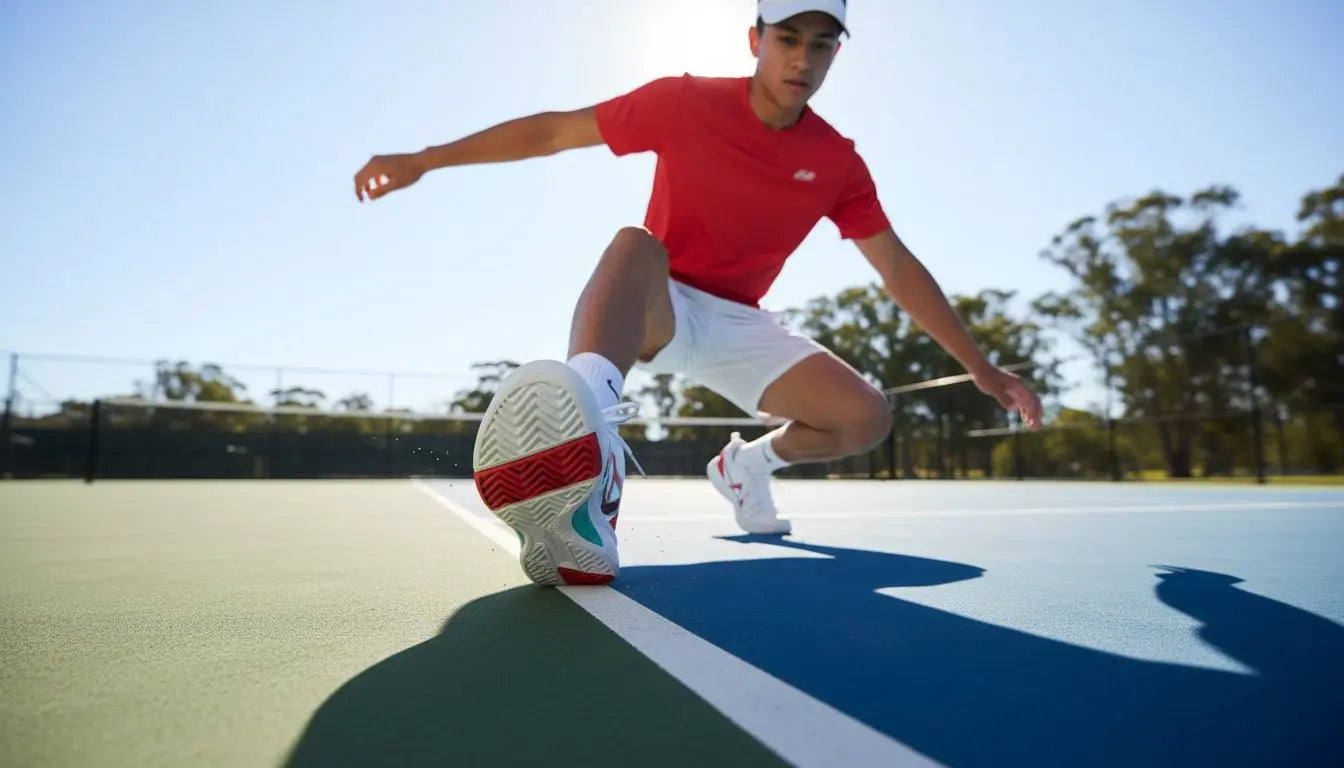
What if the standard joggers in your closet are actually the biggest risk to your safety during your first serve? It's a common worry for new players who fear rolling an ankle on a slick surface. You want to feel confident. You don't want to be distracted by gear that isn't up to the task. Finding the best tennis shoes for beginners australia is the first step toward a successful session, providing the lateral stability that regular running shoes simply lack.
We're here to help you master your first time on the court with a guide to safe footwear, functional apparel, and essential gear built for the unique Australian climate. You'll learn how to identify supportive hard court tennis shoes that prevent injury. We'll also explain why the "pocket rule" is vital for managing balls during play. Finally, we'll look at choosing clothing that meets the AS/NZS 4399:2020 sun protection standards, ensuring you stay safe under the sun while you focus on your game.
Key Takeaways
- Learn why standard runners are a safety risk and how to find the best tennis shoes for beginners australia to protect your ankles during side-to-side movements.
- Discover why your outfit needs deep pockets for ball management and why moisture-wicking fabrics are better than cotton for the local climate.
- Understand the Australian standards for sun-protective clothing and how to choose between a hat or visor for maximum outdoor comfort.
- Get expert advice on when to borrow a racquet and what features to prioritize when you are ready to buy high-quality beginner tennis racquets.
- Follow a simple checklist for your first day, from arrival times to ensuring your gear is locked in for on-court performance.
The Most Critical Item: Why Proper Tennis Shoes Matter
Stepping onto a tennis court for the first time is an adrenaline rush, but your choice of footwear determines whether that rush ends with a great rally or a painful trip to the physio. Many new players assume their gym sneakers are up to the task. However, tennis is a game of explosive side-to-side bursts and sudden stops, movements that standard trainers aren't built to handle. Understanding the history of tennis shoes reveals how these designs evolved from simple canvas flats into high-tech tools specifically engineered for lateral stability.
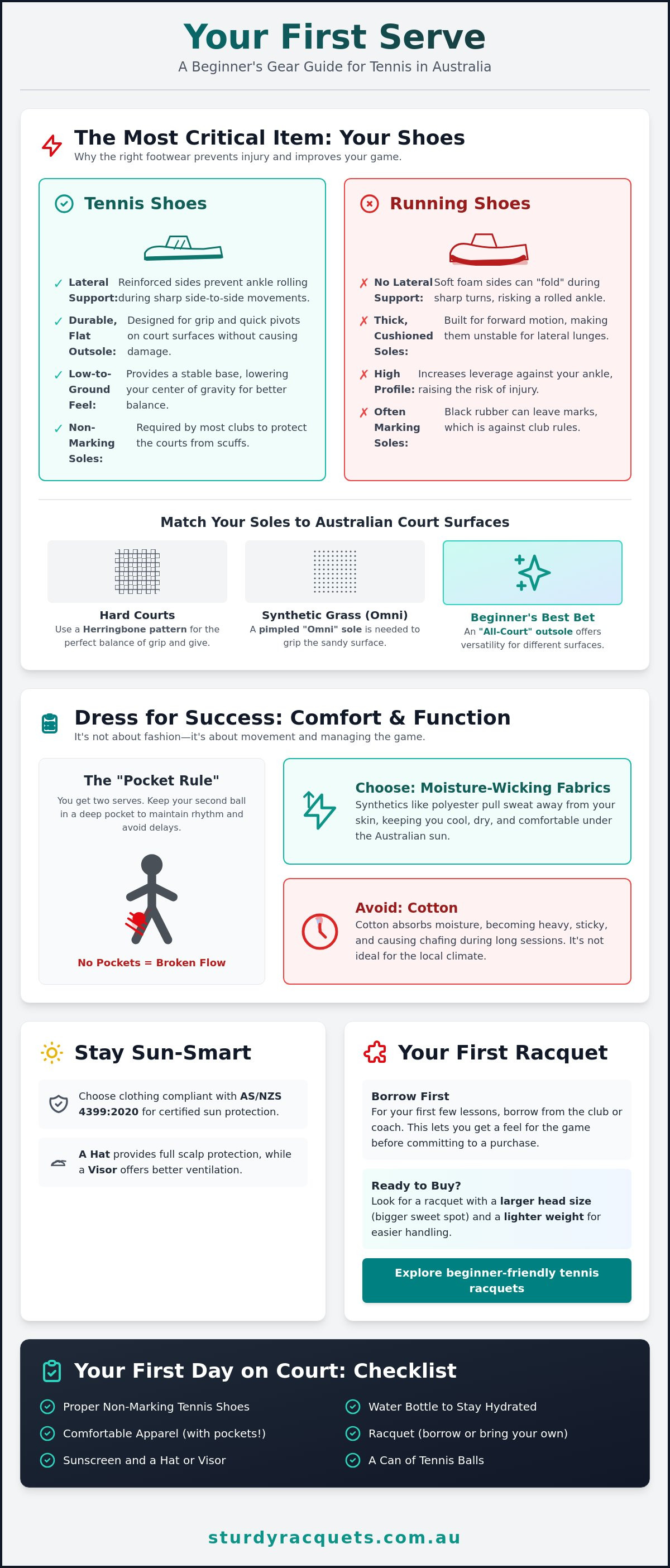
When you're searching for the best tennis shoes for beginners australia, you're looking for gear that acts as a safety net for your ankles. Unlike running, where your feet move in a predictable heel-to-toe line, tennis requires constant weight shifts. Without the reinforced side walls found in court-specific shoes, the soft foam of a running shoe can compress or "fold" during a sharp turn, leading to a rolled ankle. Investing in the right pair ensures you can focus on your swing rather than worrying about your footing.
To better understand this concept, watch this helpful video:
Beyond personal safety, there's the matter of court etiquette. Most Australian clubs enforce a strict "non-marking" rule. Standard black-soled cross-trainers often leave stubborn scuff marks on hard courts that are difficult and expensive for clubs to remove. Dedicated tennis shoes use specialized rubber compounds that provide grip without damaging the surface. If you show up in shoes that leave streaks, your coach or the club manager might ask you to change before you even hit a ball.
Tennis Shoes vs. Standard Running Trainers
Running shoes are built for forward momentum. They feature thick, cushioned soles designed to absorb vertical impact, but they lack the rigid "outriggers" on the side of the shoe that prevent tipping. In a tennis match, you'll often find yourself lunging sideways to reach a wide ball. If you do this in a high-stack running shoe, the height of the sole actually increases the leverage against your ankle if you lose balance. Lateral support is the primary safety feature of court-specific footwear, providing a lower center of gravity and a wider base to keep you upright.
Traction for Australian Court Surfaces
Australia has a unique mix of court types, and your shoes need to match where you play. While hard courts are common in major cities, many local clubs still use synthetic grass, often called "omni" courts, which are topped with a layer of fine sand. Beginners should look for tennis shoes for different court surfaces to ensure they have the right tread. Synthetic grass requires a "pimpled" or Omni sole to find grip in the sand, whereas hard courts need a durable herringbone pattern. Choosing comfortable tennis shoes with an all-court outsole is usually the smartest move for a beginner, as it offers a versatile balance of grip and durability across both surfaces.
Choosing Your Apparel: Comfort, Movement, and the Pocket Rule
While finding the best tennis shoes for beginners australia secures your safety, your clothing determines your endurance and focus. Many new players make the mistake of wearing standard gym clothes, only to realize mid-game that they have nowhere to put their extra ball. This is where the "Pocket Rule" comes in. In tennis, you typically get two serves. If your first serve is a fault, you need a second ball immediately available to maintain your rhythm. Without pockets, you're forced to walk back to your bag or hold the spare in your hand, which ruins your swing.
Before you head to the court, perform a quick range of motion test. Can you squat deeply and reach high above your head without the fabric pulling or resisting? If your clothes feel tight during a simple stretch, they will likely chafe or restrict you during a match. Avoid heavy denim or restrictive zippers. Even oversized hoodies can be a hazard, as the drawstrings or bulky pockets can interfere with your racquet follow-through.
The Importance of Ball Management
Effective ball management is about maintaining the flow of the game. For men, this means choosing shorts with deep, mesh-lined pockets designed to hold at least two balls securely during a sprint. For women, standard gym leggings often lack this feature. Look for tennis-specific skirts with built-in compression shorts or specialized leggings that feature side pockets. These are designed to keep the ball snug against your leg so it doesn't bounce around while you move. If you're struggling to find the right fit, you can always reach out for expert advice on tennis gear.
Moisture Management for Australian Conditions
The Australian sun is unforgiving, and cotton is your worst enemy on the court. Cotton acts like a "sweat log," absorbing moisture and becoming heavy and abrasive. This leads to painful chafing and can even cause you to overheat. Instead, prioritize high-performance tennis apparel made from polyester blends. These fabrics pull sweat away from your skin to the surface of the garment where it can evaporate quickly.
Modern tennis shirts often include mesh panelling in high-heat areas like the underarms and back to boost airflow. Don't forget your feet either. Even with the best tennis shoes for beginners australia, poor socks can cause trouble. Choose synthetic socks with padded heels and toes. These provide extra cushioning for the quick stops and starts that are common in tennis, significantly reducing the risk of blisters during your first few lessons.
Sun Safety and Layering for the Australian Climate
Playing in Australia means dealing with some of the highest UV levels in the world. While securing the best tennis shoes for beginners australia protects your joints from the hard court, proper sun safety protects your long-term health. The Cancer Council recommends sun protection whenever the UV Index hits 3 or above, which is a common occurrence across the country even on cloudy days. You'll need more than just a standard gym kit to stay comfortable during an hour-long outdoor session.
Choosing between a tennis hat and a visor is a frequent debate for newcomers. A full-coverage hat provides essential protection for your scalp, which is vital considering two in three Australians will be diagnosed with skin cancer by age 70. On the other hand, visors are popular because they allow heat to escape from the crown of your head, keeping you cooler during intense rallies. Whichever you choose, ensure it has a dark under-brim to reduce glare from the court surface, helping you track the ball more easily.
Managing the Australian Heat
It's vital to wear UPF 50+ fabrics for any lesson scheduled between 10 AM and 4 PM to block at least 98% of UV radiation. Since a standard white cotton t-shirt may only offer a UPF of 5 or 7, specialized sun-protective clothing is a much safer bet. Wristbands also play a huge role in keeping sweat off your palms, ensuring your racquet grip remains secure even in 30-degree heat. When applying sunscreen, stick to non-greasy or "dry touch" formulas to prevent your hands from slipping on the handle during a serve.
Post-Lesson Layering
Even in warmer states, your body temperature will drop rapidly once you stop moving. You need a light layer immediately after play to prevent muscle stiffness and help your body cool down gradually. Look for breathable, lightweight track jackets that won't take up too much room in a spacious tennis bag. During your warm-up phase, keep these layers on until your heart rate increases and your muscles feel supple, then shed them to reveal your high-performance match gear underneath. Staying hydrated is equally critical; aim to drink more water than you would during a standard gym session, as the combination of sun exposure and lateral movement is incredibly taxing on your fluid levels.
Beyond Clothing: Essential Gear for Your First Session
Once you've secured the best tennis shoes for beginners australia to handle the lateral shifts of the court, your focus will naturally turn to the racquet. Many newcomers feel a rush to buy the most expensive frame they can find before their first lesson. However, you don't always need to purchase a racquet immediately. Most coaches at Australian tennis clubs provide high-quality loaner frames for your initial sessions. This allows you to get a feel for the game before committing to a specific model. Borrowing first gives you the chance to see if you prefer a lighter frame or one with more power.
If you decide to skip the loaner and start with your own kit, choosing the right specifications is vital for your development. A racquet that is too heavy or has a grip that is too small can lead to arm fatigue or even "tennis elbow" over time. While your footwear keeps you grounded, your racquet is your primary connection to the ball. Investing in the right gear early on helps you build the correct technique without fighting against your equipment. If you're feeling overwhelmed by the options, you can always ask a specialist for racquet advice to ensure you get the perfect fit.
Your First Racquet Selection
When searching for beginner tennis racquets, prioritize a larger head size. Frames with a head size between 100 and 110 square inches are far more forgiving. They provide a larger "sweet spot," which means you'll still get a decent shot even if you don't hit the ball perfectly in the center. Beginners should also look for a lightweight, "head-heavy" balance, as this makes it easier to generate power on your swing. For a deeper dive into technical specs, read our detailed guide on how to choose a tennis racquet. If you're already committed to the sport and want something that will last as you improve, consider browsing premium tennis equipment that offers more advanced stability features.
Small Essentials for Your Bag
Don't overlook the small items that make a long session under the Australian sun more manageable. A microfibre towel is essential for wiping sweat from your face and hands between games. You should also keep a pack of spare overgrips in your bag. In the local heat, the original grip on your racquet can become slick and difficult to hold. Applying a fresh overgrip takes less than a minute and provides a tacky surface for a more secure swing. You can find these and other items in our essential tennis accessories list. Finally, consider buying a bag of "pressureless" tennis balls for your own practice. Unlike pressurized balls that go flat after a few weeks, pressureless balls maintain their bounce indefinitely, making them perfect for beginners who want to practice their serves between formal lessons.
Final Checklist: Preparing for Success on the Court
Preparation is the secret to a stress-free first lesson. Arriving at least ten minutes early is a smart move, as many Australian tennis centres are sprawling complexes where finding your specific court can take longer than expected. Use this time to meet your coach, fill your water bottle, and ensure your sunscreen has fully absorbed so it doesn't make your racquet handle slippery. Getting these logistics out of the way allows you to step onto the court with a clear mind.
Before you start your warm-up, double-check your laces. The lateral stability provided by the best tennis shoes for beginners australia is only effective if the shoes are tied securely. A snug fit prevents your foot from sliding inside the shoe during sharp changes of direction. This simple check is your best defense against the rolled ankles that often worry new players. Once your footwear is locked in, you can focus entirely on the fun of the game rather than worrying about your equipment.
Expert Advice from Sturdy Racquets
Consulting with a specialist store before you buy can save you from making expensive mistakes with the wrong gear. It's easy to be overwhelmed by technical specs, but a knowledgeable team will help you find the right balance of weight and power for your current skill level. As you continue to play, you'll also want to keep an eye on your equipment's maintenance. Reading a professional racquet stringing guide will help you understand when it's time to refresh your strings to maintain control and feel.
Ready to Play?
Success on the court comes down to three essential "Must-Haves": proper lateral-support shoes, functional pockets for ball management, and a robust sun protection strategy. With these basics covered, you're ready to enjoy everything the Australian tennis community has to offer. If you're still unsure about which frame or footwear is right for your goals, you can get personalized gear advice from our expert team. We're here to support your journey from your very first serve to your first local tournament win. See you on the court!
Step Onto the Court with Confidence
You're now equipped with the knowledge to handle your first lesson like a pro. By choosing the best tennis shoes for beginners australia, you've prioritized your safety and stability during those first lateral movements. Remember that functional apparel with deep pockets and a robust sun-protection strategy are just as vital as your swing technique. These small details ensure you stay focused on the ball rather than your gear.
We're here to help you navigate every step of your new hobby. Our team offers a wide range of beginner-friendly gear and specialized advice for Australian court surfaces to ensure you're perfectly prepared for local conditions. From finding the right fit to providing professional racquet stringing in Melbourne, we focus on the technical details so you can focus on the fun. Get expert gear advice for your first lesson today. We can't wait to see you develop your skills and enjoy every moment of your journey into the world of tennis.
Frequently Asked Questions
Can I wear normal running shoes to my first tennis lesson?
You shouldn't wear standard running shoes because they're designed for forward motion and lack the side-to-side support needed for court sports. Using them increases your risk of ankle injuries during sudden pivots or lunges. Finding the best tennis shoes for beginners australia ensures you have a flatter, more stable sole that grips the court without rolling. Most coaches will advise against runners for anything more than a very casual hitting session.
Do I need to bring my own tennis racquet to the first lesson?
You don't need to buy a racquet before your first lesson because most Australian coaches and clubs have a range of loaner frames available. This allows you to test different weights and grip sizes before you decide to invest in your own equipment. It's always a good idea to call the club or coach ahead of time to confirm they have gear ready for you. Once you're ready to commit, you can look for a frame that matches your swing style.
What kind of socks should I wear for tennis?
You should wear moisture-wicking socks made from synthetic blends or wool rather than 100% cotton. Cotton holds onto sweat, which leads to friction and painful blisters during the constant stopping and starting of a match. Look for socks with extra cushioning in the heel and toe areas. This added padding works with your footwear to absorb the high-impact forces typical of hard court play, keeping your feet comfortable for the full hour.
Is there a specific dress code for tennis lessons in Australia?
Most public and club lessons in Australia don't have a strict "whites only" dress code, so comfortable athletic wear is perfectly acceptable. You can wear standard t-shirts, shorts, or skirts as long as they allow for a full range of motion. However, almost every club requires non-marking shoes to protect the court surface. If you're playing at a traditional private club, it's worth checking their website for any specific requirements regarding collar shirts or clothing colours.
Can I wear leggings to my tennis lesson?
You can definitely wear leggings, but make sure they have side pockets designed to hold a tennis ball. Standard gym leggings often lack this feature, which makes serving difficult because you'll have nowhere to store your second ball. If your favourite leggings don't have pockets, you can wear a pair of tennis shorts or a skirt with built-in ball clips over the top. This ensures you follow the "pocket rule" and maintain the rhythm of your serve.
What should I bring in my tennis bag besides my clothes?
You should bring a large water bottle, broad-spectrum sunscreen, and a small towel to manage sweat during your session. Since tennis is a high-intensity sport, having a light snack like a banana or an energy bar can help maintain your energy levels. Don't forget to pack a spare overgrip and a light jacket for after the session. Keeping these essentials in your bag ensures you stay comfortable and hydrated throughout your entire lesson under the sun.
Should I wear a hat or a visor for an outdoor lesson?
A full hat is generally better for sun safety because it protects your scalp from direct UV exposure, which is vital in the Australian climate. However, if you find that you overheat quickly, a visor is a great alternative that allows heat to escape through the top of your head. Whichever you choose, make sure it has a wide brim to shade your eyes. This helps you track high lobs without being blinded by the glare during your match.
How do I know if my shoes are non-marking?
You can check for a "non-marking" label on the shoe's box or the sole itself. Most dedicated tennis shoes are non-marking by design, regardless of the sole colour. If you're unsure, you can test the shoe on a hard surface at home by firmly rubbing the edge of the sole against the floor. If it doesn't leave a dark streak, it's likely safe for the court. Choosing the best tennis shoes for beginners australia from a specialist store guarantees your footwear meets club standards.
Share:
Custom Tennis Racquet Stringing: The 2026 Guide to Performance & Precision
How to Prevent Tennis Elbow with the Right Gear: The 2026 Player’s Guide