


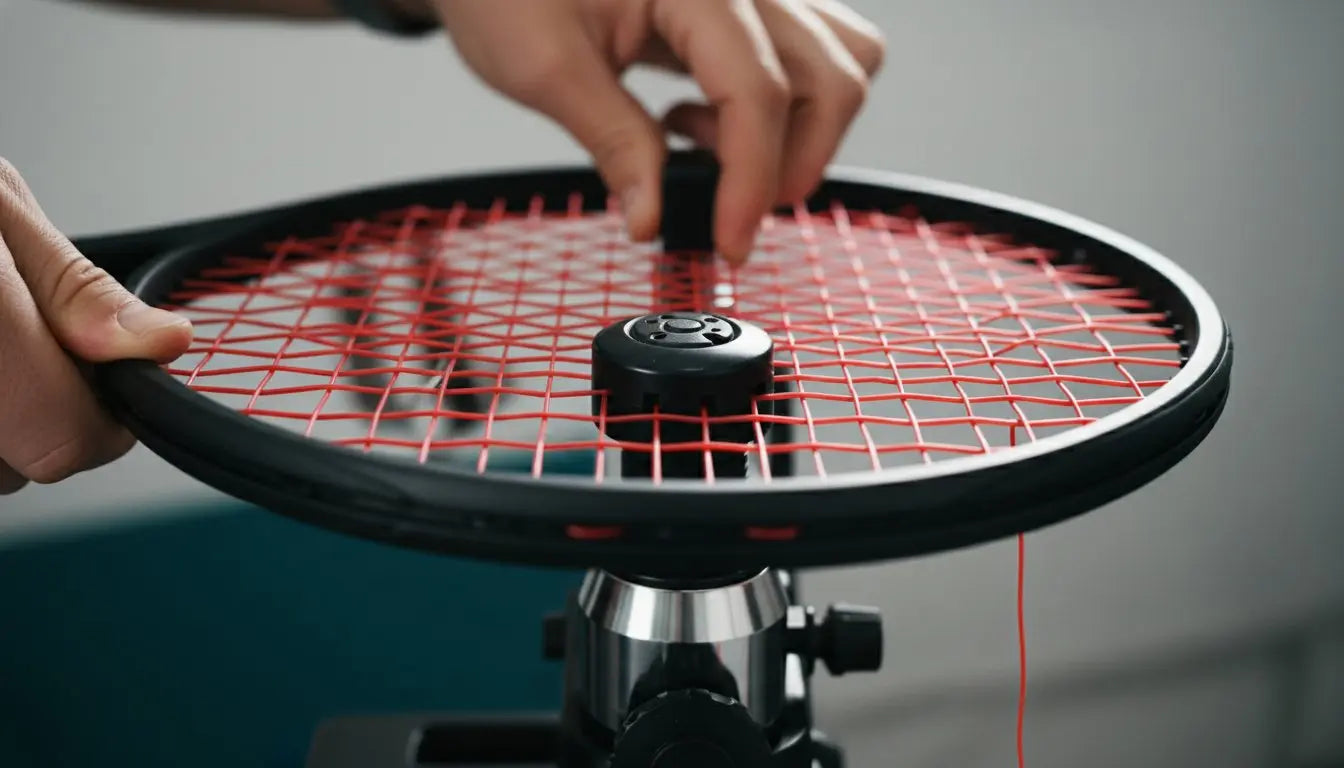
Does your favourite racquet feel? off? That crisp 'pop' has turned into a dull 'thud', and you're just not feeling connected to the ball. If you're wondering whether it's time to restring tennis racquet frames even when the strings aren't broken, the answer is a resounding yes! Old, 'dead' strings don't just rob you of performance; they can also put unnecessary strain on your arm, leading to discomfort or injury.
Many players wait far too long, losing out on the power and precision their racquet was built for. But the world of strings, tensions, and gauges can feel overwhelming. How do you know what's right for your game? And how often should you really be doing it to keep your gear in top-notch condition?
Don't worry, we're here to help! As your friendly local experts, we've created the ultimate guide to demystify the entire process. We'll show you exactly when and why to get a restring, how to choose the perfect setup, and how to unlock the fantastic power, control, and feel hiding in your frame. Let's get your gear playing its best, so you can too!
Why Restringing is Your Secret Weapon on the Court
Many players only think about restringing when a string finally snaps. But waiting that long means you've been playing with underperforming gear for weeks, or even months! Think of it like this: you wouldn't drive a performance car on bald tyres, so why play with dead strings? Getting a fresh restring is the single most impactful and affordable upgrade you can make to your game. It?s about unlocking your racquet's true potential, not just making a repair.
Regain Lost Power and Pop
From the moment they're installed, your strings start losing tension and elasticity. They become 'dead', robbing your shots of their energy. A fresh set of strings restores that lively, crisp feel. They create a powerful 'trampoline effect' that propels the ball off the string bed with exceptional force. The result? You'll find yourself hitting deeper, heavier shots with less physical effort, keeping your opponent on the back foot.
Enhance Your Control and Spin
This is where a fresh string job truly shines. New strings have a clean surface and the ability to snap back into place on impact, which allows them to 'bite' the ball and generate incredible spin. Over time, strings wear down and develop notches where they cross. This prevents them from moving freely, causing the ball to slide off the string bed with less rotation. A consistent, freshly strung racquet gives you a predictable response on every shot, so you can swing with confidence. For a deeper dive into materials and gauges, this comprehensive guide to tennis strings is a top-notch resource.
Protect Your Arm from Injury
Don't underestimate the physical toll of playing with old strings. A 'dead' string bed loses its ability to absorb impact, transferring harsh vibrations directly up your arm. This constant shock can lead to serious discomfort and contribute to common ailments like tennis elbow and shoulder strain. When you restring your tennis racquet with a suitable string at the right tension, it acts as a vital shock absorber.
The Telltale Signs: How to Know When to Restring
As a passionate player, you want your racquet to perform at its best every time you step on the court. A common rule of thumb is to restring as many times per year as you play per week. So, if you play twice a week, aim for a restring twice a year. However, this is just a starting point! The most important guide is how your racquet actually feels and performs. Even if it?s sitting in your bag, your racquet loses string tension over time.
Visual Clues Your Strings are Done
- Notching: Look where the main and cross strings intersect. If you see deep grooves or 'notches' worn into the strings, it's a major red flag.
- Fraying: This is especially common with multifilament and natural gut strings. While they offer exceptional feel, they begin to unravel as they wear.
- Discolouration: If your once-vibrant strings now look dull, dirty, and have lost their smooth texture, they are likely past their prime.
Performance Clues During Play
- A 'Dead' Feeling: The most common complaint is a loss of 'pop'. The ball feels dull or 'dead' on impact.
- Loss of Control: Are your shots suddenly flying long for no reason? Old, tension-depleted strings act like an unpredictable trampoline.
- A Change in Sound: Fresh strings make a crisp, satisfying 'ping'. Worn-out strings produce a lower-pitched 'thud'.
- Reduced Power: If you feel like you have to swing much harder to generate your usual pace, your strings are no longer doing their part.
Choosing Your Weapon: A Quick Guide to Tennis Strings & Tension
If your racquet frame is the body, the strings are the engine. They are the only part of your racquet that actually makes contact with the ball, and getting the right setup can make a fantastic difference to your game.
The Main String Types
- Polyester (Poly): The top choice for advanced players and big hitters. These stiff strings offer exceptional control and spin, but can be harsh on the arm.
- Multifilament: Perfect for club players seeking comfort and power. Made from hundreds of microfibers woven together, these strings mimic the feel of natural gut.
- Natural Gut: The gold standard for feel, power, and tension maintenance. It?s the most playable string type but comes with a higher price tag.
- Hybrid: A fantastic compromise that combines two different string types to get the best of both worlds.
Tension Basics: Power vs. Control
- Lower Tension: Creates a "trampoline effect," giving you more power and a plusher, more comfortable feel.
- Higher Tension: Creates a firmer, more "board-like" string bed. This provides less power but offers fantastic control and feedback.
Hot Tip: Check the side of your racquet frame for the manufacturer's recommended tension range. It's the perfect starting point!
For a complete breakdown, check out our Ultimate Guide to Choosing Tennis Strings.
The Big Decision: DIY vs. Professional Restringing
The Do-It-Yourself (DIY) Path
- High Initial Cost: A reliable stringing machine is a serious purchase, with prices in Australia starting around A$500 for a basic manual model and soaring to over A$5,000 for electronic ones.
- Risk of Damage: Without proper training, it?s surprisingly easy to apply incorrect pressure, which can warp or even crack your expensive racquet frame.
- Time-Consuming: For a beginner, stringing a single racquet can easily take an hour or more.
- Inconsistent Results: Achieving the perfect, consistent tension across the entire string bed takes practice.
The Professional Advantage
- Expertise and Equipment: Professionals use high-end, calibrated electronic machines that guarantee precise tension every single time.
- Guaranteed Quality: A professional job ensures your strings are installed correctly, maximising their lifespan and performance.
- Time and Safety: Drop off your racquet and pick it up ready for action. It saves you hours of effort and completely removes the risk of accidentally damaging your frame.
Ultimately, while the DIY path has its appeal, the professional advantage provides unmatched quality, expert advice, and security. Let our experts give your racquet the pro treatment it deserves.
Your Racquet's Spa Day: The Sturdy Racquets Restringing Process
Step 1: The Consultation & String Selection
- Discuss your game: Are you a powerful baseliner or a touch player at the net? We?ll talk about your playing style and what you want from your strings.
- Consider your comfort: If you have any history of tennis elbow or arm sensitivity, we can recommend arm-friendly string options.
- Recommend the perfect match: Based on our chat, we?ll suggest the ideal string type and tension from our huge range of top brands like Babolat, Wilson, Luxilon, and more.
Step 2: Precision Restringing Service
Once we?ve landed on the perfect setup, your racquet is passed to our experienced technicians. Before the new strings go in, we perform a complimentary frame inspection, checking the grommets for wear and the frame for any stress fractures. Your racquet is then mounted on a professional electronic stringing machine, which guarantees precise and consistent tension throughout the entire string bed.
Step 3: Collection & Pro Tips
We?ll notify you by text or phone as soon as your racquet?s spa day is complete. When you pick it up, we?re happy to share a few pro tips on how to maximise the life of your fresh strings. Ready to feel the difference? Bring your racquet in and let our friendly team help you play your best tennis.
Your Best Game is a Fresh Restring Away
Your racquet is more than just a frame-it's the engine of your game. As you've learned, fresh strings are the ultimate upgrade, transforming your power, control, and feel on the court.
When you're ready to restring tennis racquet for that winning edge, trust the passionate experts at Sturdy Racquets. We use professional electronic stringing machines for perfect consistency and provide friendly, knowledgeable advice from experienced players to match the right strings to your style.
Ready to feel the incredible difference? Book your professional racquet restring online or visit us in-store!
Frequently Asked Questions About Racquet Restringing
How much does it cost to restring a tennis racquet in Australia?
In Australia, the cost to restring a tennis racquet typically ranges from A$45 to over A$100. This total price is a combination of two things: the labour fee, which is usually around A$25-A$40, and the cost of the strings themselves. See our restring price guide for full details.
How long does a professional restringing service usually take?
A professional restringing service usually has a 24 to 48-hour turnaround time. If you're in a hurry, our same-day Melbourne service can have you back on court the same day.
What string tension should a beginner or intermediate player use?
For beginner and intermediate players, we generally recommend starting in the mid-to-low end of your racquet's suggested tension range, typically between 50-55 pounds. A slightly looser string bed provides a larger sweet spot, more power, and greater comfort for your arm.
Can you restring any brand or type of tennis racquet?
Absolutely! Our professional stringing machines and knowledgeable technicians are equipped to handle virtually any modern tennis racquet, regardless of brand or type.
Will new strings really make a big difference to my game?
You bet it will! Fresh strings are one of the most impactful and affordable upgrades you can make to your equipment. Over time, strings lose their tension and elasticity, which kills your power, control, and feel.
Is it worth restringing an old or cheap tennis racquet?
In most cases, yes! As long as the frame itself is in good condition and free of cracks, a fresh set of strings can breathe new life into an older or more affordable racquet.
Share:
The Ultimate Guide to Choosing the Best Badminton Shoes in Australia
Pro Tennis Racquets: Are You Ready for an Upgrade?